Epoxy flooring in Centennial, CO turns plain gray concrete into a sealed, easy-to-clean surface for garages, basements, workshops and commercial spaces. It’s for Centennial homeowners and business owners who are tired of stained, dusty or crumbling slabs, especially garage floors that take a beating from snowmelt and road de-icers every winter. Each floor starts with diamond grinding and repairs, then gets a coating system chosen for how the space is used. The result is a durable floor that looks finished and wipes clean.
Epoxy Floor Coating Services in Centennial
We focus on three main types of floors:
- Garage floor coating: flake or solid-color systems that stand up to hot tires, dripping snow and chemical spills.
- Metallic epoxy floors: a glossy, one-of-a-kind finish for basements, bonus rooms, studios and showrooms.
- Commercial epoxy flooring: coatings for shops, warehouses, offices, gyms and food-service spaces.
We also handle polyaspartic topcoats, basement floor coatings, concrete crack repair, grinding and surface prep, patio coatings and concrete sealing. If you aren’t sure which system fits your space, a free visit is the easiest way to find out.
What Centennial Winters Do to Garage Concrete
Garage floors in Centennial live through a hard cycle each winter. Cars come home covered in snow and slush, and that slush carries road de-icers. The Colorado Department of Transportation treats state highways with magnesium chloride liquids and salt-based products, and city crews use similar materials. When that meltwater drips onto bare concrete and soaks in, it adds chlorides to the surface.
Then the temperature swings. A garage that sits near freezing overnight can warm up during a sunny afternoon. Water inside the pores of the concrete freezes, expands and thaws again and again. Over a few seasons, that leads to:
- Scaling, where thin flakes pop off the surface.
- Pitting near the garage door where slush collects.
- Dark rings and white salt stains that won’t scrub out.
- Dust that tracks into the house.
A coating stops the problem at the surface. Once the concrete is sealed, meltwater sits on top where it can be squeegeed out the door instead of soaking in.
Sun, Altitude and Coating Choice
At more than 5,700 feet, Centennial gets strong sunlight. That matters more than most people expect. Standard clear epoxy can yellow (amber) when sunlight reaches it, and many garages here face the street with the door open on summer weekends. A light gray floor can turn a dull tan near the door within a couple of years.
For that reason, most garage systems here use a UV-stable polyaspartic or aliphatic urethane topcoat. These clear coats keep their color in sunlight and add scratch resistance. Epoxy still has its place as a base coat, where it’s protected from light and provides a strong bond to the slab.
Every installer weighs the same question here: the right coating solution for a floor depends on how much sun and traffic it gets.
Centennial Homes and Their Floors
Centennial has a wide range of homes, and the age of the house often tells us what to expect from the concrete.
- Older neighborhoods such as Highlands 460 and parts of Southglenn date largely to the 1970s and 1980s. Their garage slabs often have old paint, oil stains and wider cracks that need extra prep.
- Master-planned areas like Willow Creek, Homestead and Piney Creek have attached two- and three-car garages that families use as storage, workshops and gyms.
- Larger custom homes in Foxridge and Chenango often have oversized garages, workshops and finished basements where a metallic or solid-color system makes sense.
Many Centennial homes also have finished or partly finished basements. Those slabs sit below grade, so they need a moisture test before any coating is chosen.
Choosing a Finish: Flake, Solid Color or Metallic
The look of a coated floor comes down to three main styles, and each suits different rooms.
- Flake floors are the most common choice for Centennial garages. Colored vinyl chips are scattered into the base coat, then sealed under a clear topcoat. The speckled pattern hides dust, tire marks and small flaws in the concrete, and the chips add light texture underfoot. Blends range from subtle grays and tans to bolder mixes.
- Solid-color coatings give a clean, uniform look. They work well in workshops, laundry rooms, storage areas and commercial spaces where a plain, bright floor makes it easier to spot dropped parts or spills.
- Metallic epoxy is the decorative option. It has depth and movement, and it suits finished basements, home gyms and showrooms more than working garages.
The finish you choose also affects how the floor feels and how often it needs attention. A dense flake floor with a textured topcoat is forgiving and grippy. A high-gloss solid or metallic floor shows more and feels smoother. During the free visit, we bring samples so you can see them in your own light, which matters a lot in a garage with a single window or a basement with recessed lights.
How an Epoxy Floor Project Works
- First call. Tell us about the space, how you use it and what you’d like it to look like.
- Free on-site visit. We look at the concrete, check for moisture, measure the floor and show color and flake samples.
- Written quote. You’ll get a clear proposal that names the system, the prep work and the cure times.
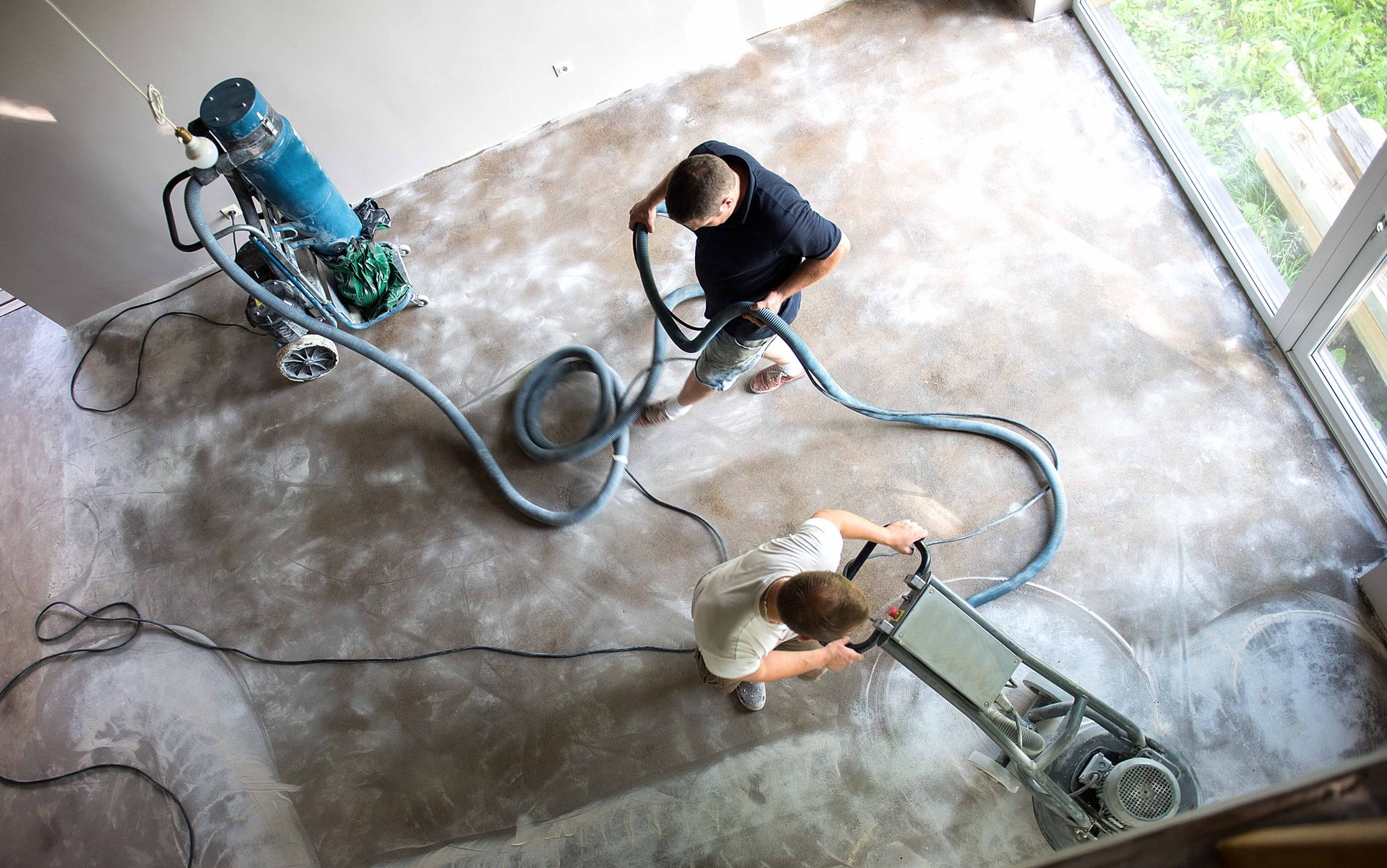
- Preparation. The floor is diamond ground, cracks and pits are filled, and dust is vacuumed up.
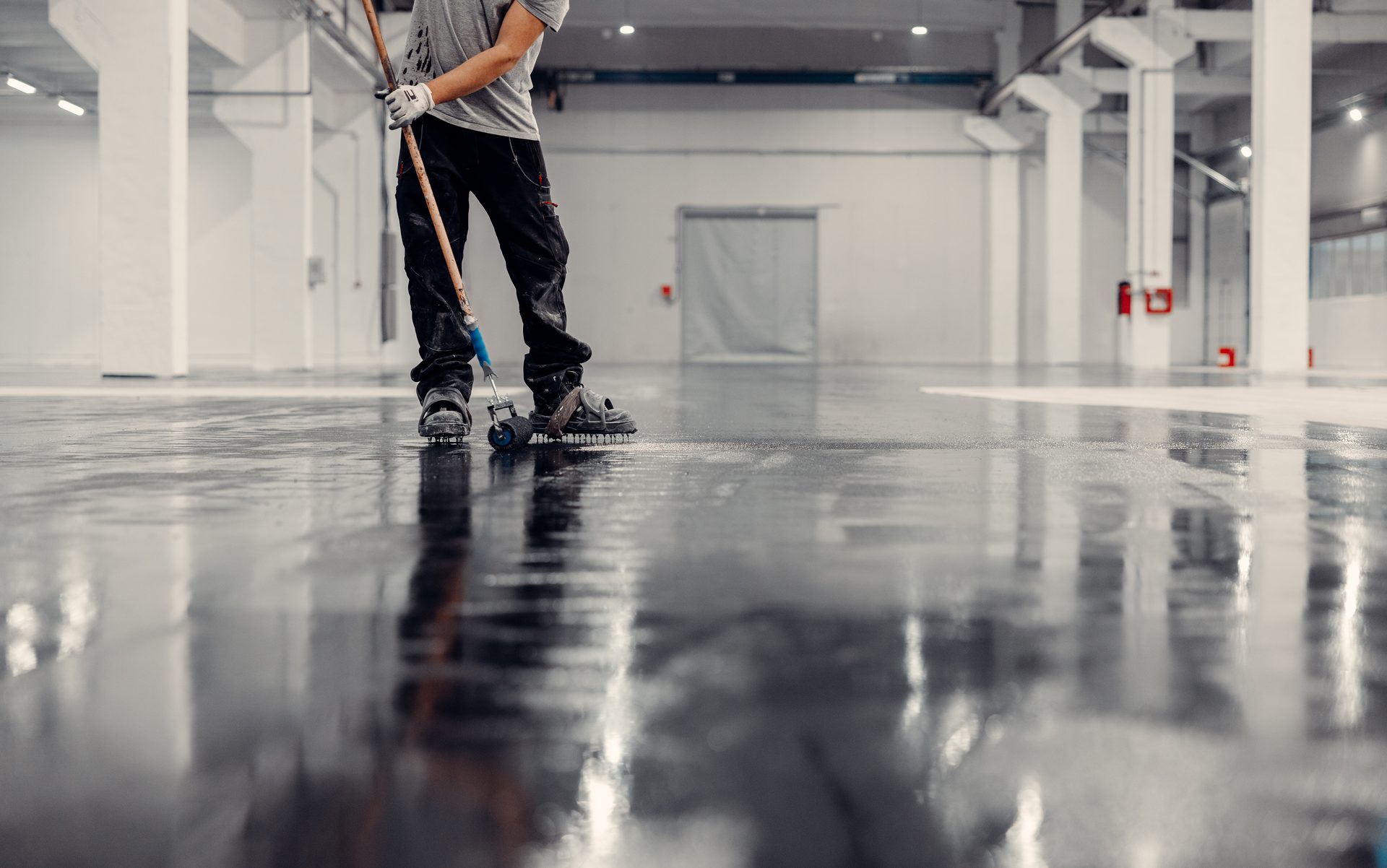
- Coating. The base coat, flakes or pigments and topcoat go down in order, with time between coats.
- Cure and return. We tell you when it’s safe to walk on the floor and when the cars can come back.
How to Compare Floor Coating Companies
Floor coatings vary a lot, and two quotes that look similar can describe very different floors. When you talk with any installer in Centennial, ask:
- How will the concrete be prepared? Diamond grinding gives a much better bond than acid etching or a simple cleaning.
- What is in each coat? Ask for the product type and the thickness of the base coat and topcoat.
- Is the topcoat UV-stable? This matters for any garage that gets sun.
- How are cracks and joints handled?
- Will there be a moisture test? This is especially important for basements.
- What does the manufacturer cover? Product warranties come from the coating maker, so ask what they include and what voids them.
A good installer will answer each question plainly and put the details in writing.
Caring for a Coated Floor
A coated floor needs very little care. Sweep or use a dust mop for grit, and squeegee winter meltwater out of the garage rather than letting it sit. For a deeper clean, use a mild cleaner and a soft mop. Avoid soap that leaves a film, and put a mat or pad under kickstands and jack stands to prevent dents. With that basic care, a well-built system keeps its look for many years.
Areas We Serve in Centennial
We work throughout Centennial, including Willow Creek, Southglenn, Highlands 460, Piney Creek, Homestead, Foxridge and Chenango. If you live or run a business in the city, give us a call to talk about your floor.